

Cassette air conditioners
Cassette air conditioners sit in the ceiling and spread air across a room from above. We explain where they work well, what ceiling space they need and how they compare with wall mounted units.

How cassette air conditioners work
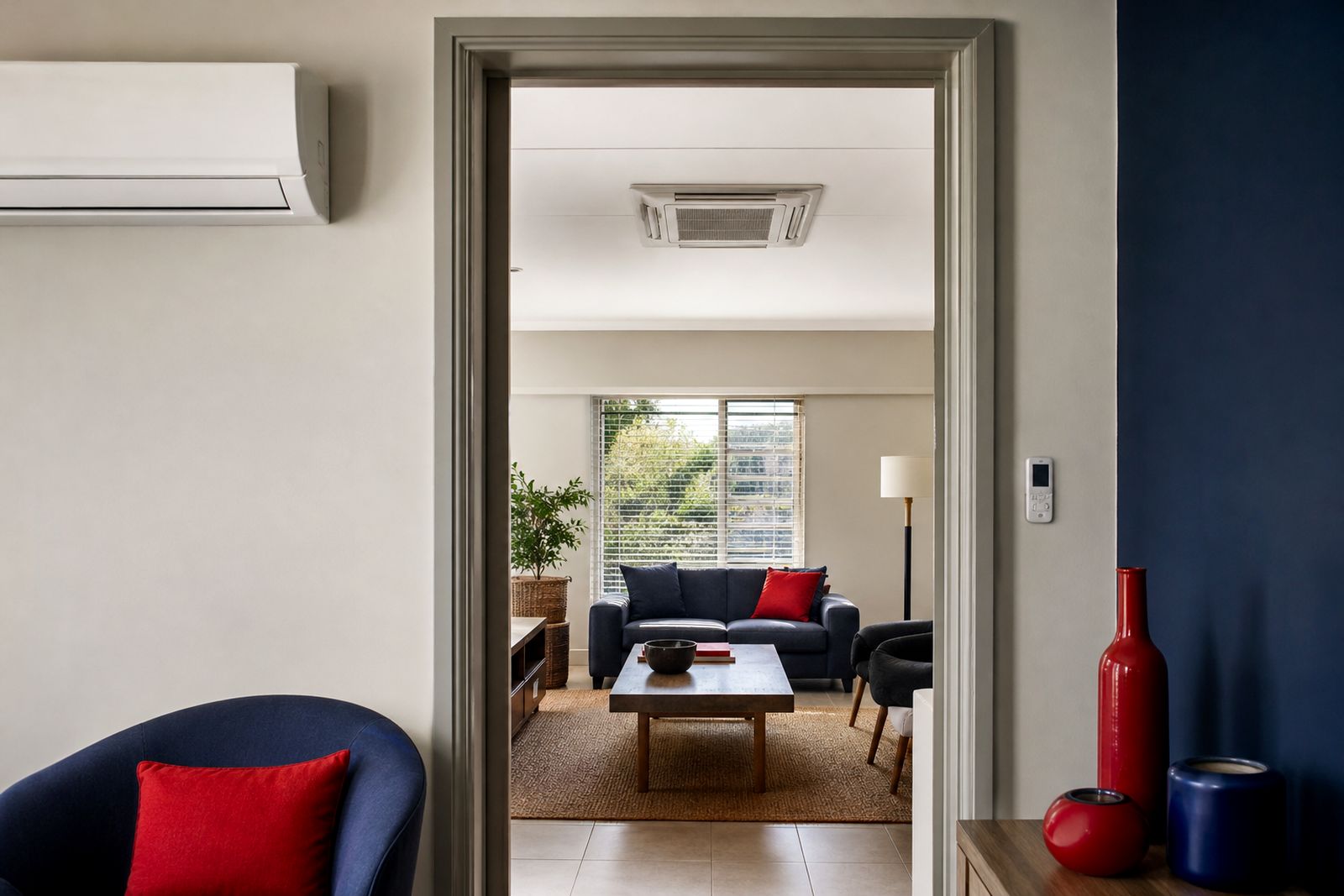
Cassette air conditioners are indoor units that sit within the ceiling, with the visible panel set flush below. Air is supplied from overhead and is usually directed in several directions, which helps cover a broader floor area than a single wall mounted outlet.
This layout often suits open plan offices, reception areas, shops, meeting rooms and larger home spaces where wall space is limited or where a more central air pattern is preferred. We explain the pros and cons clearly so you can compare cassette systems with midwall split air conditioners and other options before choosing a unit.
Where they suit a room best
A cassette unit usually makes the most sense in a room with a fairly open layout. Because the air is spread from the middle or near the middle of the ceiling, workstations, shelving and partitions have less effect than they would with a side blowing wall unit.
They are often considered for spaces such as:
- Open plan offices with shared working areas
- Shop floors and retail display spaces
- Waiting areas and reception rooms
- Larger living areas or entertainment rooms at home
If the room is broken into many small zones, a cassette may be less practical than another layout. We can help you compare room type, usage and unit size and BTU before you send an enquiry through the contact form.
What the ceiling space needs to allow
The main requirement with a cassette air conditioner is suitable ceiling void space above the room. The ceiling needs enough depth for the indoor unit body, as well as room for pipe and drain routing by a qualified, registered technician. If the ceiling cavity is shallow or crowded, a cassette may not be the easiest choice.
Ceiling position also matters. A unit needs a sensible location for balanced air spread, and the room should not have major obstacles directly under the airflow path. For planning, it helps to think about the ceiling layout, light fittings, bulkheads and how the room is actually used day to day. Our guidance on placing indoor and outdoor units can help you understand the basics.
Pros and cons compared with midwall splits
A cassette unit can look neater in some commercial or open plan settings because most of the body is above the ceiling and only the grille is visible below. It can also give a more even feel across a wider area when the room is open and the unit is well matched to the space.
Against that, a cassette depends more on the ceiling structure and available void space. A midwall split is often simpler to place in a smaller room and can be a more natural choice where there is suitable wall space and a standard room shape. In short, cassette units are often attractive for overhead, multi direction air distribution, while midwall units are often easier for typical smaller rooms.
If you are comparing options for a business setting, you may also want to read more about office air conditioning.
Everyday upkeep and choosing the right unit
Good results depend on matching the unit to the room, not just choosing by appearance. Room size, ceiling height, heat load, occupancy and how open the layout is all affect the choice. We supply air conditioners and help customers compare system types before they buy.
For routine owner care, keep to simple checks. Clean or replace filters as recommended, check settings, and keep the outdoor unit area clear of obstruction. For more guidance, see owner care and filters, or send us an enquiry through the contact form.
What our Air Conditioning customers say
Verified Google reviews
Questions we get asked
Are cassette air conditioners only for offices and shops?
No. They are often chosen for offices and retail spaces, but they can also suit larger home rooms, especially open plan living or entertainment areas. The key question is whether the room layout and ceiling space make a ceiling mounted unit practical.
How much ceiling space does a cassette unit need?
It depends on the unit and the ceiling layout, so there is no single answer. In general, there must be enough ceiling void depth for the indoor unit body and room for the necessary connections and drainage by a qualified, registered technician.
Is a cassette better than a midwall split for a large room?
Sometimes, yes. A cassette can distribute air more evenly across an open room because it blows from above in several directions. A midwall split can still be suitable in some larger spaces, so it helps to compare layout, wall space and airflow needs carefully.
Do cassette units look less bulky inside a room?
Many people find them visually cleaner because the main body sits above the ceiling and only the grille panel is visible below. That can work well in smart office interiors or rooms where preserving wall space and keeping a tidy appearance matters.
What routine checks can an owner do on a cassette air conditioner?
Owners can keep an eye on filters, check that the settings are sensible and make sure the outdoor unit area stays clear. Anything beyond those basic checks, especially electrical, gas or refrigerant work, should be left to a qualified, registered technician.
Also worth a look
Ask about an air conditioner
Send a note through our contact form with the rooms you want to cool or warm and how they are used, and we will come back with information, options and a quote.
Open the contact form