Hideaway and ducted systems
Hideaway and ducted systems cool more than one room from a concealed indoor unit, with filtered air supplied through ducts and a quieter feel indoors.
How hideaway and ducted systems work
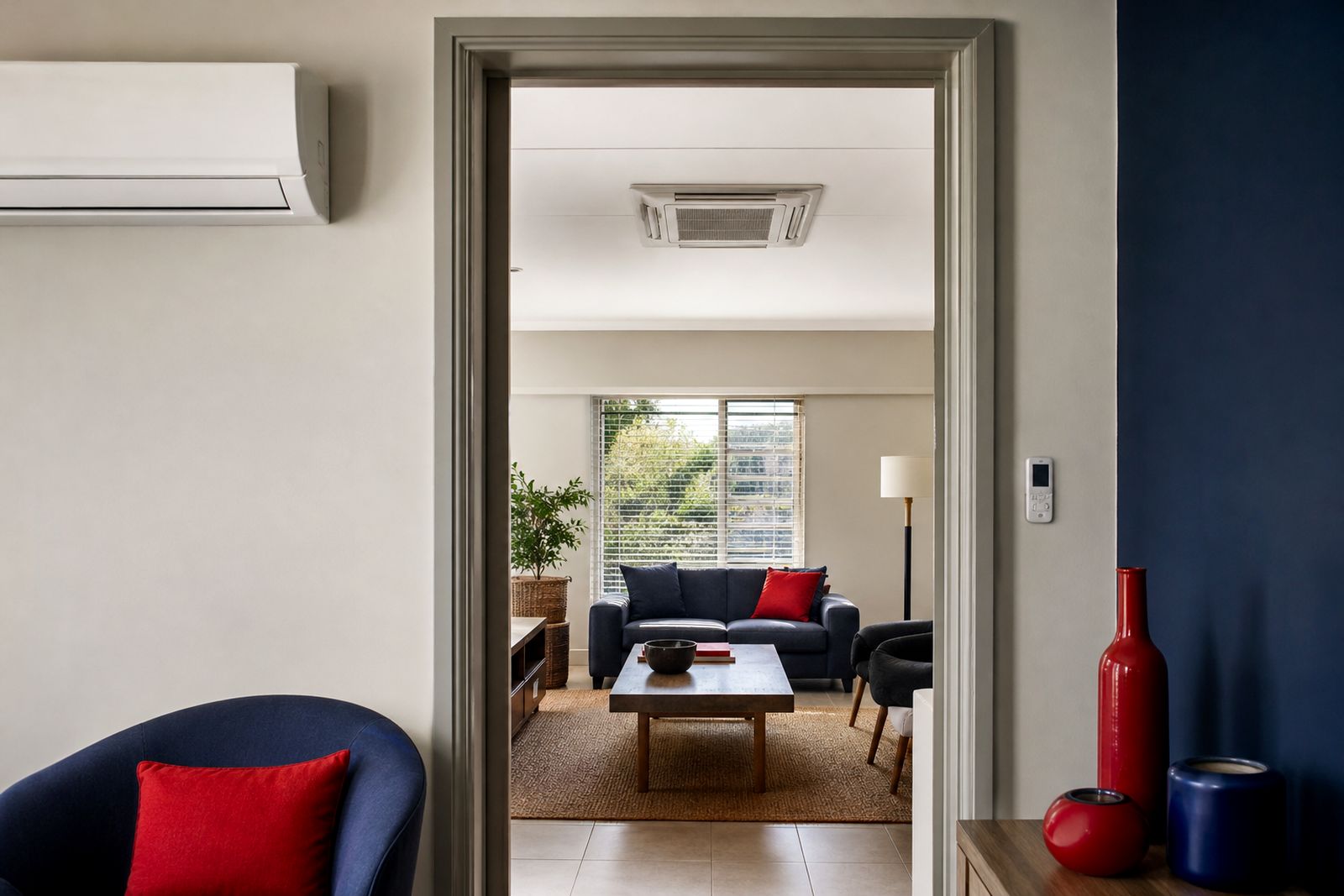
A hideaway system uses an indoor unit that sits out of sight in the ceiling space or another concealed area. Air is drawn in, filtered, cooled and dehumidified, then sent through ducts to supply grilles in more than one room or zone.
The outdoor condenser sits outside, so the indoor rooms usually feel calmer and quieter than spaces where the main fan section is in the room itself. This layout suits people who want air conditioning that is less visible and more evenly shared across connected areas.
We explain where hideaway and central ducted systems make sense, how they differ from midwall split air conditioners and cassette air conditioners, and what to consider before choosing a unit through our contact form.
Where they suit homes and business spaces
These systems are often chosen for larger homes, long passages with several bedrooms, open plan living areas, reception areas, boardrooms and office sections that need a cleaner ceiling line with fewer visible indoor units. They are especially useful when you want one concealed system to serve several rooms instead of placing separate units around the building.
They can also help where the look of the room matters. Only the grilles and controls are usually visible, which can suit modern interiors, formal meeting areas and spaces where wall area is needed for furniture, shelving or displays.
For broader residential and workplace comparisons, see home air conditioners and office air conditioning.
Main advantages of a concealed central system
The biggest advantage is whole area comfort. A well planned ducted layout can cool and dehumidify several rooms from one hidden indoor unit, helping the space feel more balanced than a single room system trying to push air beyond its natural reach.
Another benefit is appearance. Because the main indoor section is concealed, rooms avoid the look of multiple wall mounted units. Air is also filtered as it is drawn into the system, which supports cleaner circulation in everyday use.
- Low visual impact, only grilles and controls are usually seen.
- Quieter indoors, the outdoor condenser is outside and the main indoor section is hidden away.
- Multi room coverage, useful for linked rooms and larger floor areas.
- Practical comfort, cooled and dehumidified air helps reduce that sticky indoor feeling.
Points to weigh before you choose
A ducted system is not the right answer for every property. The building needs suitable ceiling space and a sensible duct route. Room layout matters too, because very separate spaces may be better compared against other system types rather than trying to make one concealed system do everything.
Choice of unit size is important. If the system is too small, it may struggle in hot weather. If it is too large, it can cycle poorly and feel less settled. We help customers compare options and understand unit size and BTU in a practical way before buying.
It is also worth thinking about access for routine filter checks and owner care. General planning points are covered in choosing a system and our guide to benefits of central air conditioning.
Routine owner care and getting advice
Owner care for a hideaway or ducted system is mostly about simple checks. Keep filters clean as recommended, check that settings still match the season, and keep the outdoor unit area clear of clutter, leaves and anything that may block airflow. These small habits support day to day performance.
For straightforward advice on concealed systems, unit supply and model comparisons, send your enquiry through the contact form. You can also read more in owner care and filters and running costs.
What our Air Conditioning customers say
Verified Google reviews
Questions we get asked
What is the difference between a hideaway system and a normal split unit?
A hideaway system has a concealed indoor unit and uses ducts to send cooled air to more than one room. A normal split unit usually serves one room directly from a visible indoor unit. The choice depends on layout, appearance and whether you want multi room coverage from one system.
Are ducted systems quieter inside the building?
They often feel quieter indoors because the main indoor section is hidden away and the condenser is outdoors. You still hear airflow at the grilles, but many people prefer the calmer feel compared with having a visible unit in each room.
Can one ducted air conditioner cool my whole house or office?
Sometimes, but it depends on the size, layout and how separate the rooms are. Open plan areas and linked rooms often suit this approach better than very divided spaces. We help customers compare whether one concealed system or another air conditioning type makes more practical sense.
What owner maintenance can I do on a hideaway or ducted system?
Keep an eye on filters, use sensible temperature settings and make sure the outdoor unit stays clear around it for good airflow. Those are the main owner checks. Anything electrical, gas or refrigerant related should be left to a qualified, registered technician.
How do I know what size ducted unit to choose?
Do not judge by floor area alone. Ceiling height, sun exposure, room layout, glazing and how many spaces you want to cool all matter. We explain the basics of BTU sizing so you can compare options more confidently before requesting a quote through our contact form.
Also worth a look
Ask about an air conditioner
Send a note through our contact form with the rooms you want to cool or warm and how they are used, and we will come back with information, options and a quote.
Open the contact form