

Midwall split air conditioners
Midwall split air conditioners are a common choice for practical room by room cooling. We explain where they work well, what to weigh up, and how to choose a sensible size.
What a midwall split unit is
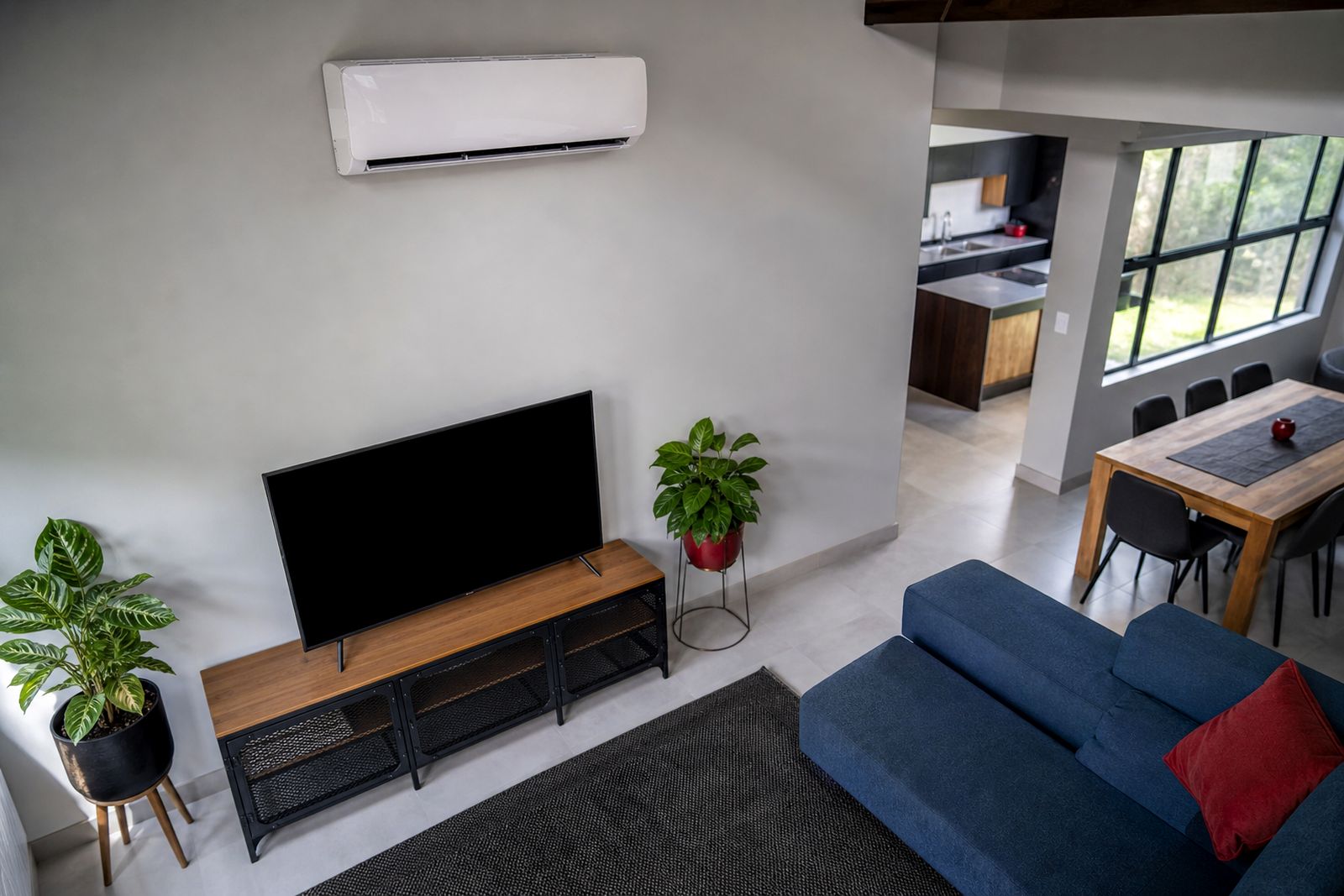
A midwall split air conditioner has two main parts, an indoor unit mounted high on a wall and an outdoor condenser placed outside. The two parts work together to cool a single room or defined area, which makes this type popular where simple, direct comfort is the goal.
For many homes and smaller business spaces, a midwall split unit is the most familiar air conditioning format. It is usually chosen for one room at a time rather than for whole building coverage. We explain how it compares with other air conditioner types and help customers decide whether a single room system matches the way they use the space each day.
Where midwall split units suit best
These units often suit bedrooms, lounges, studies, reception rooms and small offices where people spend a lot of time in one area. If you want to cool a closed room or a space with a clear boundary, a midwall split system can be a practical match.
They are less suited to very long, broken up layouts or large open plan areas where air needs to move evenly across multiple sections. In those cases, another system type may be worth comparing. For home focused guidance, see home air conditioners. For workspaces, see office air conditioning.
- Good for single bedrooms and main bedrooms
- Useful in lounges and TV rooms
- Often suitable for private offices and small meeting rooms
- Best where doors and room boundaries help keep cooled air in place
Noise, comfort and everyday use
One reason people choose a midwall split unit is the balance between comfort and everyday convenience. Because the noisier condenser is outside, the indoor room sound is often more manageable than with older all in one room units. That can matter in bedrooms, quiet offices and living spaces where background noise affects rest or concentration.
Comfort also depends on airflow direction and how the room is used. A unit placed high on the wall can spread air across the room, but the feeling will differ if the space has a low ceiling, direct afternoon sun, large windows or frequent door opening. We help customers think through these practical points before choosing a unit.
To keep performance steady, owners can do a few simple checks such as cleaning filters, checking settings and keeping the outdoor unit clear. More on that is covered at owner care and clean filters.
Choosing the right size for the room
Getting the room size right matters as much as choosing the type of air conditioner. A unit that is too small may struggle on hot Gauteng days, while an oversized one can cycle too often and feel less settled in use. Midwall split units are usually chosen by matching cooling output to the room and the way the room holds heat.
We help customers compare factors such as floor area, ceiling height, window size, sun exposure and how many people normally use the space. A small shaded bedroom needs a different approach from a sunny lounge or a compact office with computers running through the day. For more detail, see unit size and BTU.
Pros and cons to weigh up
Midwall split air conditioners are popular for good reasons, but they are not the answer to every layout. The main advantage is focused cooling where you need it most, without moving into a more complex whole building system. They are also a familiar option for people who want clear control over one room.
- Pros, good for single rooms, generally quieter indoors than older room units, practical for bedrooms and small offices, and easier to compare by room size.
- Cons, one unit usually serves one main area, wall position matters, and they may be less suitable for large open spaces or homes and offices that need a more central approach.
If you are comparing options, we can help you weigh midwall split units against cassette systems or hideaway and ducted systems. JMB Air Conditioning supplies air conditioners and explains the pros and cons before you buy. For information or a quote on units, use the contact form.
What our Air Conditioning customers say
Verified Google reviews
Questions we get asked
Is a midwall split air conditioner good for a bedroom?
Yes, it is often a practical choice for a bedroom because it cools a defined room and the indoor sound is usually more manageable than older all in one room units. The main point is choosing a sensible size for the room and its sun exposure.
Can one midwall split unit cool an open plan lounge and dining area?
Sometimes, but it depends on the size and shape of the area, ceiling height, window area and how open the space is. If cooled air can escape too easily, comfort may be uneven. We usually suggest comparing the room layout carefully before choosing a unit.
How do I know what BTU size I need for a midwall split unit?
BTU choice should match the room, not just a rough guess. Floor area matters, but so do ceiling height, afternoon sun, window size, insulation and how many people use the room. We help customers compare these factors so the unit suits real day to day use.
Are midwall split air conditioners noisy?
They are often quieter indoors than older room units because the condenser is outside. Even so, perceived noise still depends on the room, the wall position and how quietly the space is used. Bedrooms, studies and small offices usually benefit from careful placement and sensible sizing.
What upkeep can an owner do on a midwall split air conditioner?
Owners can keep filters clean, check the remote settings and make sure the outdoor unit stays clear of leaves, dust and obstructions. Those simple checks help day to day performance. Anything electrical, gas or refrigerant related should be left to a qualified, registered technician.
Also worth a look


Ask about an air conditioner
Send a note through our contact form with the rooms you want to cool or warm and how they are used, and we will come back with information, options and a quote.
Open the contact form