

Placing the indoor and outdoor units
Good placement affects comfort, noise, drainage and later cleaning. We explain the practical points owners should think about before a qualified, registered technician does the work.
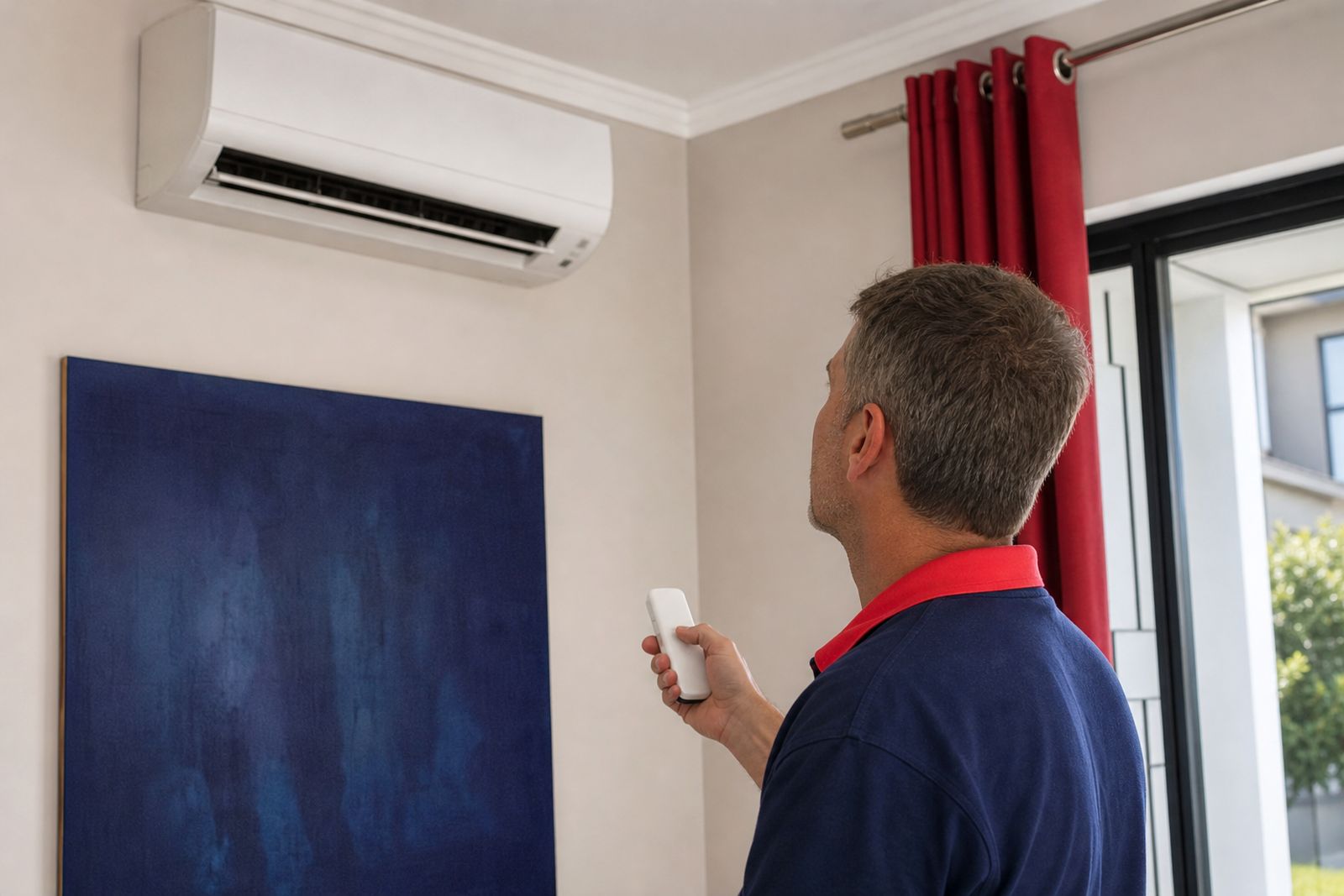
Aim for even airflow indoors
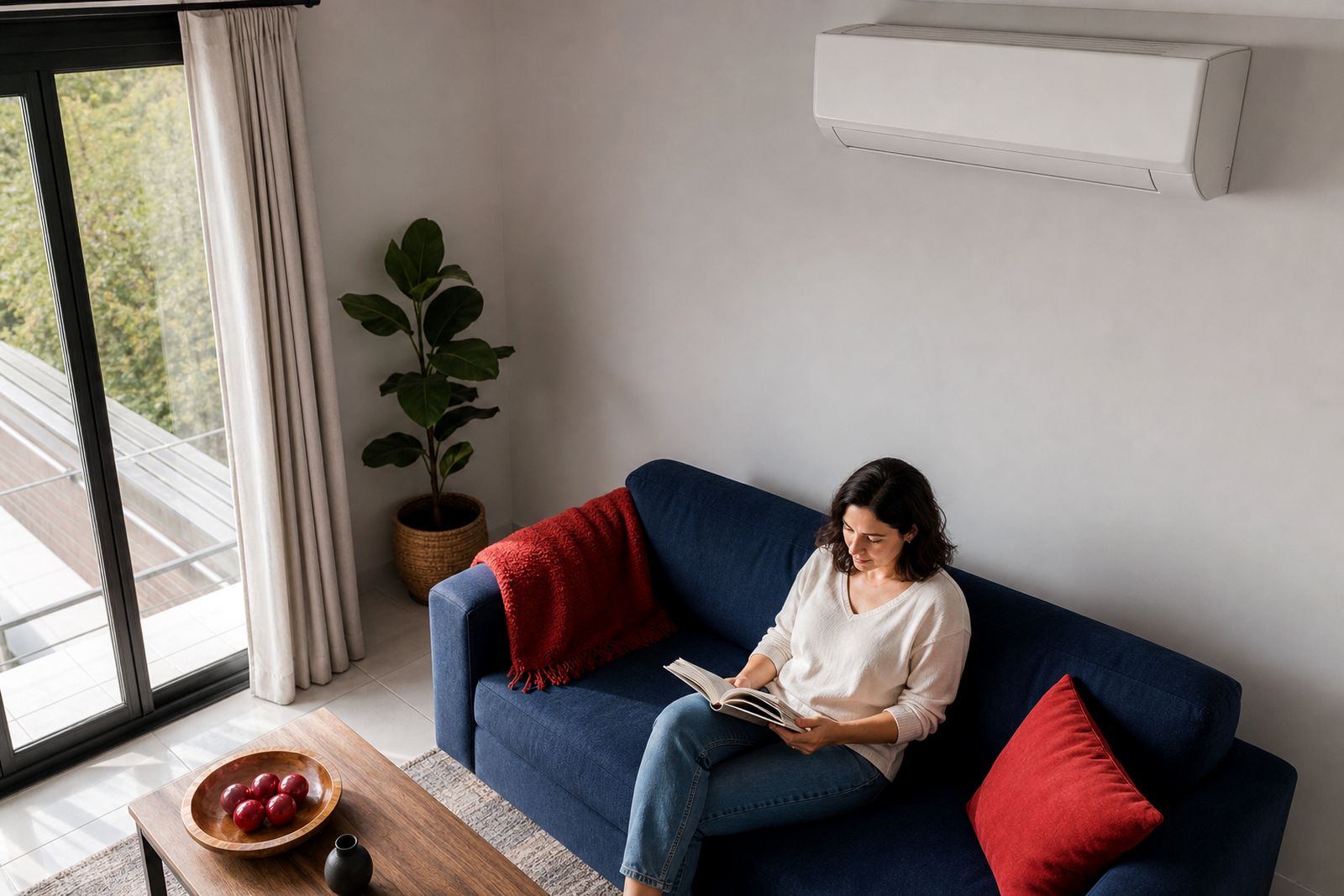
The indoor unit should be in a spot where air can move across the room, rather than getting trapped in a corner or blocked by tall furniture, curtains or shelving. A clear path helps the room feel more evenly cooled and can reduce the temptation to force colder settings than you really need.
It also helps to think about how the room is used during the day. In a lounge, bedroom or office, the best position is often the one that spreads air across the occupied area instead of sending it straight at one fixed point. If you are still comparing system types, our guide to choosing a system can help you weigh the layout of the room against the type of unit.
Avoid blowing directly onto people
Cold air blowing straight onto a bed, work table, sofa or reception chair can make a room uncomfortable even when the temperature itself is reasonable. In practice, comfort often improves when the airflow passes through the room and mixes gently, instead of sitting on one person for hours at a time.
This matters in both homes and businesses. A bedroom unit aimed directly at the pillow, or an office unit pointed at one workstation, may lead to constant thermostat changes and complaints about the room feeling too cold. We explain the options for home air conditioners and office air conditioning so you can compare layouts before choosing a unit.
Think about outdoor noise and heat
The outdoor unit needs space to move air freely. If it is boxed into a very tight area, surrounded by clutter or placed where hot discharge air has nowhere to go, performance can suffer in day to day use. Owners should also think about neighbour impact, especially in smaller properties or where outdoor areas are close together.
A considerate position is one that keeps airflow open while avoiding unnecessary noise near bedroom windows, patios or shared boundaries. It is also worth noting whether the outdoor unit will sit in harsh afternoon sun for long periods. Shade can be helpful, but the area still needs open airflow and should not be enclosed. The final fixing position and all connections are for a qualified, registered technician.
Plan for condensate drainage
Indoor units produce condensate while cooling, so drainage needs thought from the start. Owners should consider where that water will go, whether it could mark a wall, drip onto a walkway or create nuisance near an entrance, window or outdoor seating area.
Good planning helps avoid messy surprises later. In upper floor rooms and neat office interiors, drainage routes may affect which wall feels practical. The technical method is not an owner decision, but it is sensible to raise drainage early when making an enquiry. If you are also weighing room size and cooling demand, see unit size and BTU explained.
Leave room for routine cleaning
Both indoor and outdoor units should remain accessible for routine upkeep. For owners, that mainly means simple checks such as cleaning filters when needed, checking settings and keeping the outdoor unit clear of leaves, dust and stored items. If a unit is tucked too tightly above cupboards or behind obstacles, even basic care becomes awkward.
Try to avoid positions that make regular access difficult or unsafe. Think about whether the front of the indoor unit can be reached easily, and whether the outdoor unit can stay clear of garden growth, boxes or other items over time.
- Keep the airflow path around the outdoor unit open.
- Do not block the indoor unit with furniture or décor.
- Check that drainage will not cause drips where people walk or sit.
- Ask questions through our contact form if you want help comparing suitable unit types.
We supply air conditioners and explain the pros and cons before you buy. Any work involving electrical parts, gas or refrigerant, and the placing and connecting of a unit, is for a qualified, registered technician. For simple owner care, you can also read owner care and filters.
Also worth a look
Ask about an air conditioner
Send a note through our contact form with the rooms you want to cool or warm and how they are used, and we will come back with information, options and a quote.
Open the contact form